
— Our Approach
Our Approach
Our work is guided by evidence-based frameworks and a commitment to both individual transformation and systemic change.
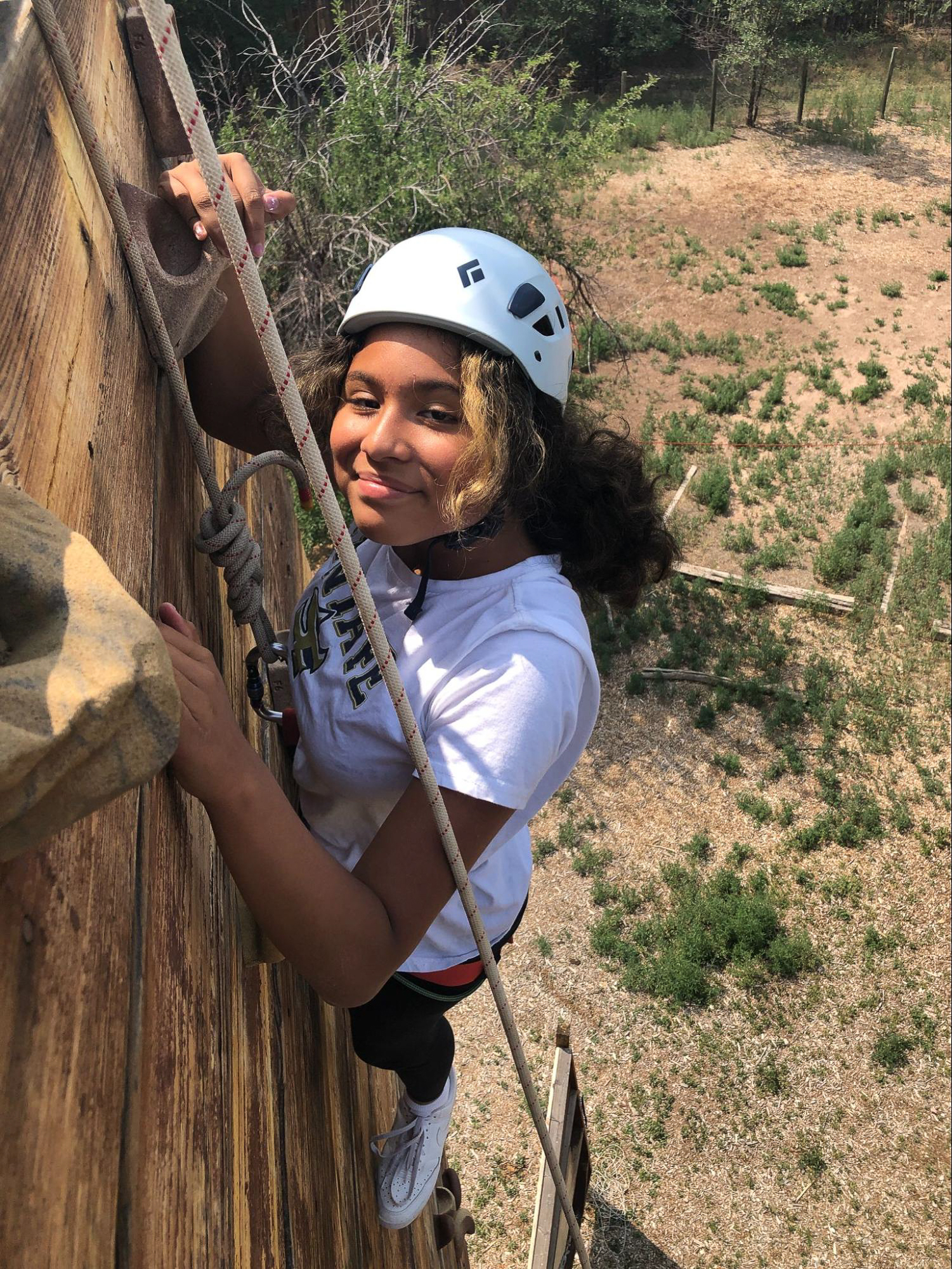
Every person at the heart of our work
At The Mountain Center (TMC), our person-centered philosophy is a foundational commitment that shapes every aspect of our work. This approach ensures that the individuals, families, groups, and communities we serve are always at the heart of our decisions, practices, and policies.
Rooted in our mission, vision, and values, our work is further guided by three core programmatic approaches: Trauma-Informed Care, Harm Reduction, and Experiential Education. These frameworks not only support our person-centered philosophy but also help us deliver services in ways that are empathetic, responsive, and empowering.
We believe that every person deserves to be heard, valued, and supported in ways that are aligned with their personal goals and definitions of well-being. This belief is not just a value, it is embedded in our organizational structure, program design, and daily operations.
There are many layers to TMC, and across all of them, we remain guided by a unified purpose: to serve our clients and communities with integrity, compassion, and respect. In every policy we draft, in every decision we make, and in every relationship we build, our commitment to person-centered care remains constant.
Building on strengths, not deficits
Resilience is the core outcome we work toward across all programs. It's the ability to navigate adversity, adapt to challenges, and move forward even when life is hard.
Beginning in the 1980s, resilience research revealed something remarkable: while some people exposed to high-risk situations developed challenges, the majority did not. For example, while one in four children who grow up in homes affected by alcoholism may develop substance use issues themselves, three in four do not.
This realization shifted the question from "What's wrong?" to "What's protective?" Researchers identified that resilience develops through:
Social Competency
The ability to form healthy relationships and communicate effectively.
Problem-Solving Skills
The capacity to assess situations and make decisions.
Autonomy
A strong sense of identity and belief in one's own effectiveness.
Sense of Purpose and Future
Connection to meaning, values, and possibilities.
The Mountain Center focuses on building upon strengths people already have rather than identifying weaknesses. We partner with community and government agencies, Native American communities, and nonprofits to formulate collaborative strategies that deliver positive outcomes and reach underserved individuals.
We are passionate about providing services for and reaching out to those in our community who are most in need.
Learning through experience. Healing through connection.
The Mountain Center's Experiential Adventure and Community-Based Resiliency Model® incorporates elements of adventure, education, and challenge to help participants break through self-limiting beliefs, discover their potential, and build positive self-identity and resilience.
This model guides individuals to develop self-esteem, self-confidence, and self-awareness; learn positive values; develop better social skills and relationships; and facilitate positive changes in communities.

Create Safe Space
We invite and create environments for individuals, groups, and communities to participate in — spaces that are physically, emotionally, and culturally safe.

Acknowledge Existing Strengths
We acknowledge the existing internal and external strengths and assets of individuals, groups, and communities.

Engage in Purposeful Experience
We create intentional environments where people engage in the true purpose of our programming: adventure, life skills, harm reduction, community engagement.

Connect and Reflect
We facilitate supportive environments where individuals and groups can connect with others and reflect on their experiences.

Process and Transfer
We create environments where people process their experiences and transfer those experiences back into their communities and lives at home.
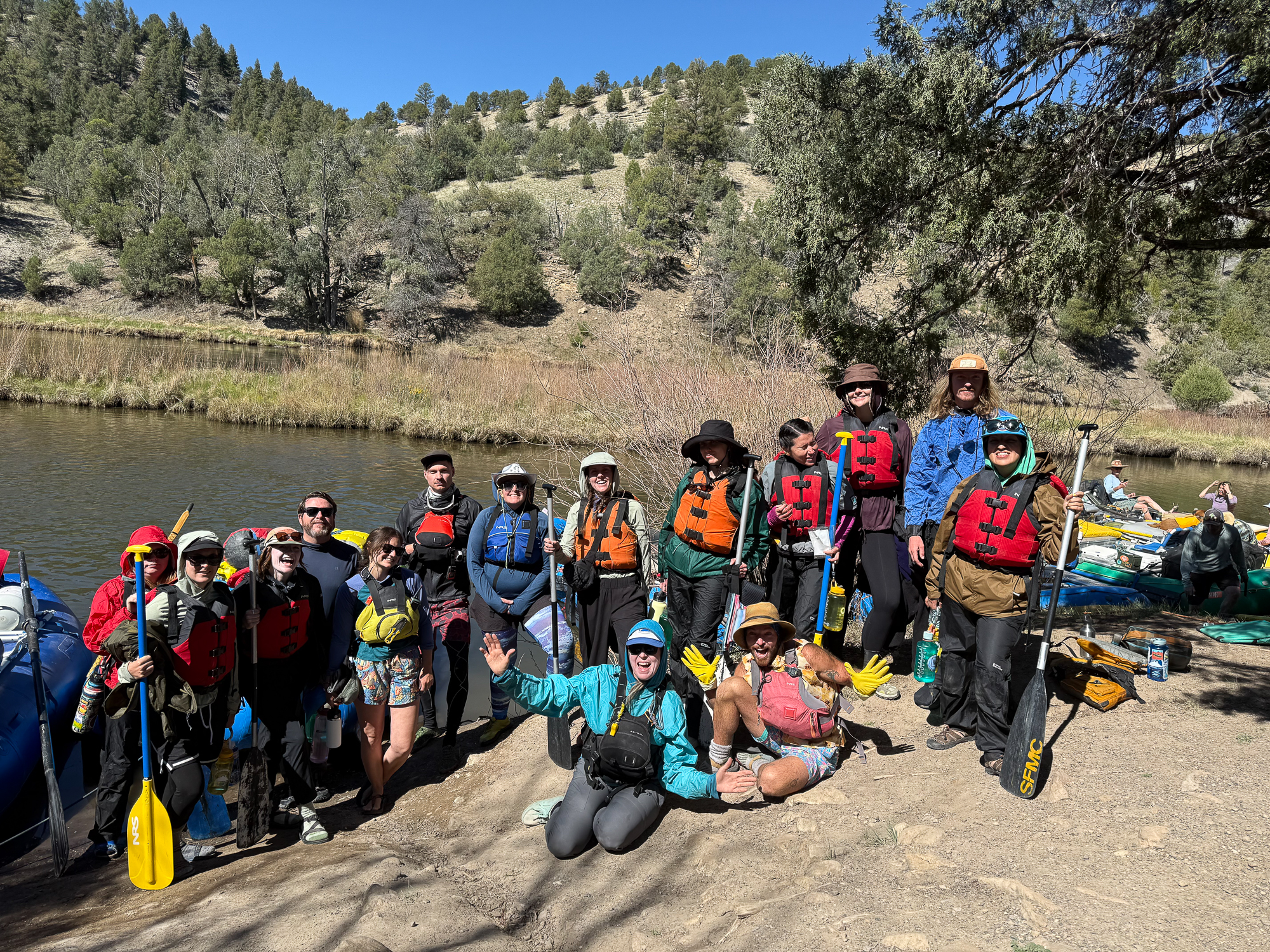
The healing power of the natural world
"Experiential education is a philosophy and methodology in which educators purposefully engage with learners in direct experience and focused reflection in order to increase knowledge, develop skills, and clarify values." — Association for Experiential Education
Nature does not judge. The land helps people tune their nervous system, practice new skills, and experience themselves differently. Nature provides a space to rebuild trust and move out of survival mode.
Immersion
The outdoors removes daily distractions and grounds people in the present.
Reflection
Challenges provide clear results. Participants see their own patterns and can apply those lessons to their lives.
Resilience
Moving into a stretch zone encourages growth. People take emotional risks in a safe, supported setting.
Connection
Shared experiences build strong peer bonds. Group encouragement creates lasting impact.
Strengths
Our approach focuses on existing assets. We help people find and use their internal resources.
Evidence
This method aligns with research on resilience and positive development.
Safety and trust as foundation
Many people we serve have experienced trauma, whether from violence, neglect, discrimination, poverty, or systemic oppression. Trauma-informed care recognizes how trauma affects people and creates environments where healing is possible.
Safety
Physical and emotional safety are prioritized in every interaction.
Trustworthiness & Transparency
We are clear about what we can offer and follow through on commitments.
Peer Support
Connection with others who've had similar experiences is healing.
Collaboration & Mutuality
Decisions are made with people, not for them.
Empowerment, Voice & Choice
Participants have agency in their own care.
Cultural Responsiveness
We recognize how identity and history shape trauma and healing.
Meeting people where they are, without judgment
The term "harm reduction" describes any set of strategies designed to minimize the potential adverse consequences of inherently risky activities or behaviors — such as the use of seat belts when driving or ropes and helmets when rock climbing.
It's most commonly associated with evidence-based interventions and services that target people who are at risk for contracting diseases such as HIV and Hepatitis C, at risk for overdose, or potentially engaged in high-risk activities.
This philosophy is applied and embedded in our programming, within the context of the large social and emotional environment of individuals, groups, and communities with whom we work.
Progress over Perfection
Any positive change is valuable. We do not require abstinence.
Self-Determination
People are the experts on their own needs.
Dignity
We provide services without judgment or prerequisites.
Accessibility
Low-barrier access saves lives.
Value
Every life has inherent value.
Social change is the process of identifying and removing barriers that impact the people we serve. While we focus on personal growth, we also provide groups with the resources and skills to address the issues in their own lives.
Most people we serve come from communities that have faced generations of injustice. By focusing on social justice in our youth and adult programs, we change the landscape of experiential education. We help individuals navigate unjust systems while we work to improve the systems themselves.
Issues We Address Together
- — HIV/AIDS and HCV awareness and prevention
- — Overdose prevention
- — Native American language and cultural identity preservation
- — LGBTQ+ youth safety and inclusion
- — Justice for marginalized communities
Individual healing within systems that need transformation
Social change is the process of identifying and removing barriers that impact the people we serve. While we focus on personal growth, we also provide groups with the resources and skills to address the issues in their own lives.
Most people we serve come from communities that have faced generations of injustice. By focusing on social justice in our youth and adult programs, we change the landscape of experiential education. We help individuals navigate unjust systems while we work to improve the systems themselves.
Issues We Address Together
- — HIV/AIDS and HCV awareness and prevention
- — Overdose prevention
- — Native American language and cultural identity preservation
- — LGBTQ+ youth safety and inclusion
- — Justice for marginalized communities
Results-driven care, evidence-backed outcomes
Our outcome data show that our work is a powerful vehicle for developing self-worth, responsibility, compassion, and connection to community. We measure what we do because results matter, and the communities we serve deserve programs backed by evidence.
Internal and External Assets Resilience Module
Administered pre and post for all participants who attend more than one day of programming. Measures changes in self-esteem, problem-solving skills, social competency, sense of purpose, and autonomy.
Client Satisfaction Survey
Administered on select participants at the end of each program to assess experience and identify areas for improvement.
Referral Agent Survey
Administered to representatives of agencies sending participants to TMC programs, assessing outcomes and partnership value.
Program-Specific Tracking
Each program tracks relevant metrics appropriate to its services and goals.
Continuous Quality Improvement
Regular program reviews, staff training on best practices, and adaptation based on participant feedback and outcome data.
Commitment to safety and excellence
All Mountain Center staff are trained in a variety of modalities, including clinical, technical, and medical approaches.
- — Lead staff in nature-based settings hold Wilderness First Aid or Wilderness First Responder CPR certification
- — Staff leading ropes courses or technical operations complete rigorous training and vetting before running activities
- — All staff participate in an average of 12 in-house trainings annually covering risk management, clinical skills, cultural responsiveness, technical skills, and programmatic education
- — Four or more external trainings per year from consultants and partners support organizational growth and knowledge
Risk Management Committee
The Mountain Center has a volunteer Risk Management Committee made up of members with passion for our mission and experience in related fields. The committee meets quarterly to review incidents and accidents and supports sound, conservative decision-making for mitigating risk and exposure to clients, staff, and stakeholders.
Proving our work is a powerful vehicle for developing self-worth, responsibility, compassion, and connection to community.
The Mountain Center’s innovative programming uses a strength-based, positive youth development approach to provide intervention and prevention services to adjudicated youth, at-risk populations, shelters, and treatment centers. Utilizing our Experiential Adventure and Community-Based Resiliency Model, we work closely with agencies and groups to prescriptively design programs that meet the presenting needs of each client group. The Mountain Center provides dynamic therapeutic learning experiences that incorporate elements of adventure, challenge, and interpersonal processing/reflection coupled with a life-skills curriculum. These experiences include cooperative games, problem-solving initiatives, high-ropes challenge courses, rock climbing, backpacking, and rafting. Programs can consist of sequences of four to ten sessions, overnight therapeutic camps, and/or wilderness experience programs.
Evaluation Methods
- Internal Assets Resilience Module - administered pre and post for all participants that attended more than one day of programming.
- Client Satisfaction Survey - administered to all program participants at the end of each program.
- Referral Agent Survey - administered to representatives of agencies sending participants to SFMC programs.
YOUTH PROGRAMS
Figure 1 - Pre and Post Mean Scores for Resilience Sub-Scales Across All Respondents
July 2016 - June 2017

Youth and Adult programs to help change the community of New Mexico for the better
Figure 2 – Pre and Post Mean Resilience Scores by Age Group
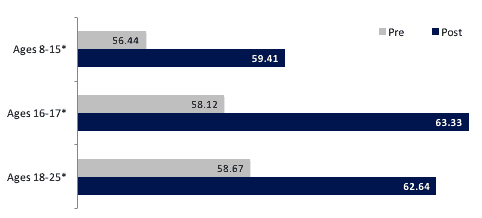
How ages have changed
PROGRAMS WITH ADULTS
Figure 1 - Pre and Post Mean Scores for Sub-Scales Across All Respondents
July 2016 - June 2017
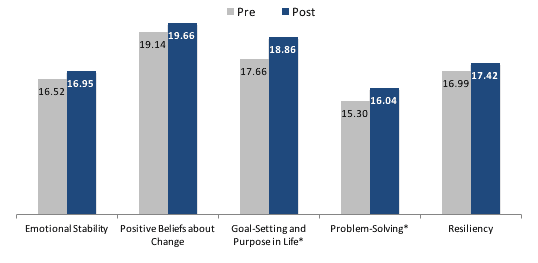
Pre and Post views on beliefs, purpose, problem solving and more in New Mexico
Figure 2 - Overall Pre and Post Mean Scores by Age Group
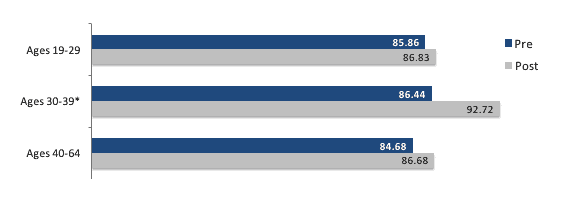
The Mountain Center Statistics
Held to the highest standards
AEE Accreditation
Association for Experiential Education — accredited under standards for both Adventure Programming and Outdoor Behavioral Healthcare. The Mountain Center has maintained this accreditation since 2000.
CARF Accreditation
Commission on Accreditation of Rehabilitation Facilities — TMC began the process in 2025 and attained a 3-year accreditation in June 2026. Applies to our organizational structure, Counseling Services, and Aspen House program.
Medicaid
We accept Medicaid to increase accessibility to behavioral health services for New Mexicans.
Corporate Compliance
The Mountain Center is dedicated to the delivery of behavioral healthcare with strict conformance with the highest standards of accountability — preventing and detecting fraud, fiscal mismanagement, and ensuring full legal and regulatory compliance.
Questions about our approach?
We'd love to share more about how we work and how our programs can support you, your family, or your community.
Contact Us